162kt
of SAF used by Group airlines in 2024, an increase of more than 200% from 2023
one of the highest volumes globally
80%
Typical reduction of carbon emissions
compared to fossil jet fuel
1st
airline group to commit to SAF uptake target by 2030
$3.5bn
total expenditure (including future commitments) for SAF offtake
as of 31 December 2024
Based on an assumed jet fuel price of $800 per metric tonne and contracted margins for SAF production.
What is sustainable aviation fuel?
SAF is the main term used by the aviation industry to describe a non-conventional (fossil derived) aviation fuel. SAF is the preferred IATA term for this type of fuel although when other terms such as sustainable alternative fuel, sustainable alternative jet fuel, renewable jet fuel or biojet fuel are used, in general, the same intent is meant.
‘Biofuels’ typically refers to fuels produced from biological resources (plant or animal material). However, current technology allows fuel to be produced from other alternative sources, including non-biological resources; thus, the generic description of SAF is used. The chemical and physical characteristics of SAF are almost identical to those of conventional jet fuel and they can be safely mixed with the latter to varying degrees, use the same supply infrastructure and do not require the adaptation of aircraft or engines. Fuels with these properties are called ‘drop-in fuels’ (i.e. fuels that can be automatically incorporated into existing airport fuelling systems). This definition is available on the IATA website.
The feedstocks for these fuels, currently waste materials such as used cooking oil, absorb CO2 in their growth cycle before this carbon is recycled into fuel and then emitted during the flight. SAF produces similar levels of carbon dioxide to conventional aviation fuels when burned, but the carbon dioxide generated is already part of the carbon cycle and is not extracted from the ground specifically for creating aviation fuel. This means that using SAF results in a reduction in carbon emissions compared to the traditional jet fuel it replaces over the lifecycle of the fuel.
Sustainable Aviation Fuels (SAF) are chemically almost identical to kerosene. The feedstocks for these fuels – currently waste materials such as used cooking oil, municipal waste or waste wood – absorb CO2 in their growth cycle before this carbon is recycled into fuel and then consumed in the flight. The processes used to produce SAF are certified to international standards to ensure the fuels are safe to use. SAF can be used in existing aircraft and airport fuelling infrastructure.
IAG ensures its SAF complies with strict sustainability certification schemes to ensure the feedstocks come from sustainable sources, and that the production processes conserve water and energy and have minimal wider impacts.
What role will SAF play in our transition plan?
SAF reduces carbon emissions on a greenhouse gas lifecycle basis, typically by 80% or more compared with fossil jet fuels. IAG is on track to deliver a 100-fold increase in its SAF volumes between 2022 and 2030 and expects to use SAF for 70% of total fuel in 2050.
In 2021, the Group set a target of using one million tonnes of SAF a year by 2030, dependent on appropriate government policy support, and this volume will save as much carbon as taking one million cars off the road a year.
In March 2025, the Group airlines applied for the EU SAF support mechanism available under the EU ETS through the FEETS Regulation. This support mechanism aims to promote the uptake of SAF by granting EU ETS emission allowances to airlines for the use of SAF on eligible routes within the scheme. The allowances help bridge the price gap between conventional jet fuel and SAF on flights covered by EU ETS carbon pricing.
During 2024, Group airlines uplifted more than 162,000 tonnes of SAF, of which 29,000 tonnes qualified for EU ETS support. Based on this volume, the Group was awarded 497,539 ETS emissions allowances in September 2025, which volumes were credited to each airline’s EU ETS registry account. Based on the 2024 weighted average price of auctions carried out in accordance with Delegated Regulation (EU) 2023/2830 (5), as published on the common auction platform (€64.74 per allowance), this equated to financial support of €32,201,675. Refer to note 2 of the consolidated financial statements for a description of the financial accounting for EU ETS allowances.
Due to the retrospective nature of this programme, the Group airlines will receive confirmation of EU ETS allowances awarded for SAF volumes uplifted in 2025 as part of their 2026 EU ETS compliance cycle.
Our targets
Latest Blog
Getting It Right: Why the SAF Revenue Certainty Mechanism Matters for Decarbonising Flight
Key SAF partnerships
| Producer | Production location | Anticipated supply start | Technology |
|---|---|---|---|
| BP | Europe; China | since 2021 | Hydrotreated esters and fatty acids (HEFA) |
| Neste | Finland; Singapore | since 2021 | HEFA |
| Phillips 66 | Humber, UK | since 2022 | HEFA |
| Repsol | Cartagena, Spain | since 2022 | HEFA |
| Moeve (formerly Cepsa) | Huelva, Spain | since 2023 | HEFA |
| EcoCeres | Shanghai; China | since 2024 | HEFA |
| ST1 | Gothernburg, Sweden | since 2024 | HEFA |
| LanzaJet | Georgia, USA | 2025 | Alcohol-to-jet |
| Twelve | Washington, USA | 2025 | Power-to-Liquid |
| Aemetis | California, USA | 2026 | HEFA |
| Infinium | Texas; USA | 2026 | Alcohol-to-jet |
| Wastefront | Sunderland; UK | 2027 | Tyre pyrolysis oil |
| Gevo | South Dakota, USA | 2028 | Alcohol-to-jet |
| LanzaJet | Teeside, UK | 2028 | Alcohol-to-jet |
| Nova Pangaea | Teeside; UK | 2028 | Advanced biothanol |
| Velocys | Immingham, UK Mississippi, USA |
2029 | Fischer-Tropsch |
SAF partnerships in action
LanzaJet: Freedom Pines
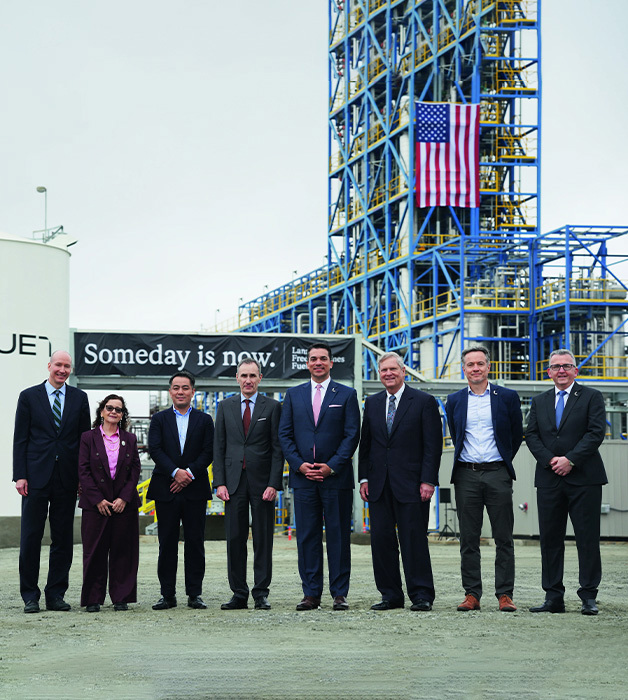
Supported by investment by British Airways in 2021, on 24 January 2024, LanzaJet opened the first production plant dedicated to low-carbon ethanol SAF in Georgia, USA.
Twelve
In February 2024, IAG signed its largest-ever SAF purchase agreement with Twelve, a SAF project based in Washington which produces advanced Power-to-Liquid SAF made from CO2, water and renewable energy.

Project Speedbird
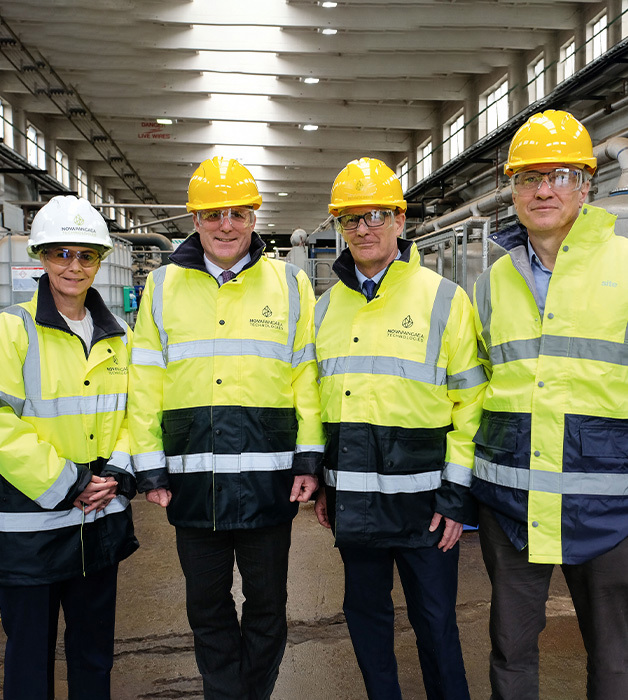
In June 2023, British Airways, LanzaJet and Nova Pangaea Technologies signed an agreement that will accelerate Project Speedbird, an initiative created by the companies in 2021 to develop cost-effective SAF for commercial use in the UK. Jonathon Counsell, IAG Group Head of Sustainability and Jim Davies, IAG Programme Director – Sustainable Flight are pictured here with Anthony Brown MP, Aviation Minister and Sarah Ellerby, CEO Nova Pangea.